
Industry
Custom manufacturing ERP for production, inventory and dispatch
Bring production, stock and dispatch records into a shared system. We build ERP and inventory applications around the sequence your teams run, connecting shop-floor activity with the information managers need to plan and respond.
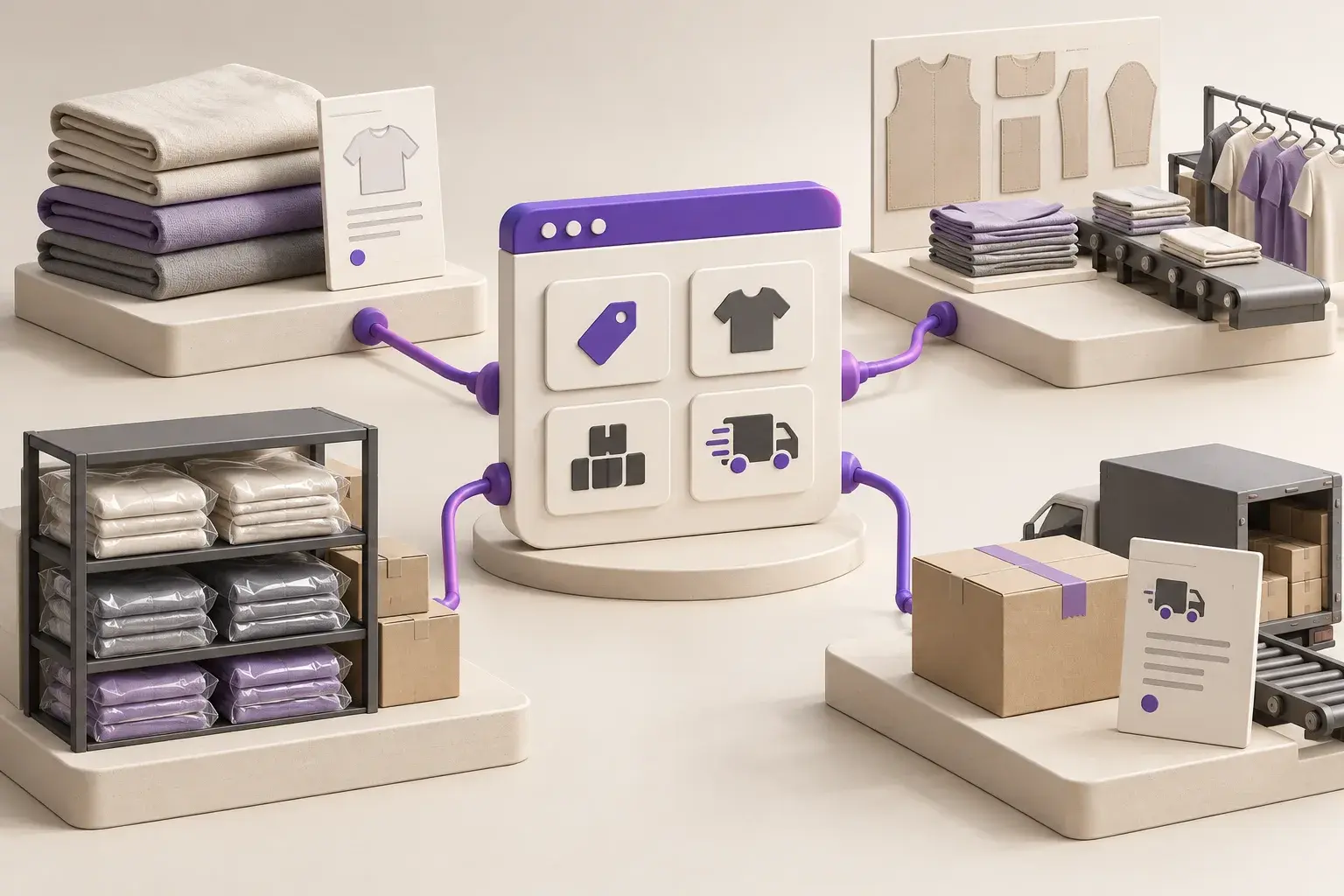
When stock and production records fall out of step
Production tells me one number, dispatch tells me another, and I'm stuck in the middle.
The floor knows what is actually finished, dispatch knows what is actually loaded, and until someone reconciles the two by hand, neither number is one you can promise a customer against.
We find out about a material shortage after the line has already stopped.
Consumption gets tallied at month end instead of against the running plan, so a shortage becomes visible only once it has already cost a shift.
Quality issues get caught at the customer, not on our line.
Without a quality check built into the sequence itself, a defect travels through packing and dispatch before anyone downstream has a reason to look for it.
Shared records from material receipt to dispatch
We map the movement of orders, materials and finished goods with the people responsible for each stage. The system connects scheduling, stock, quality checks and dispatch, with capture and reporting suited to the working conditions.
Production scheduling across lines
Batches sequenced against machine and line availability, so a schedule change in one place updates what everyone downstream is planning against.
Stock and consumption analytics
Raw material consumption tracked against the production plan, with reorder points that fire from actual movement rather than a monthly stock count.
Quality checks built into the sequence
Inspection points placed where a defect is cheapest to catch, with results recorded against the batch instead of a separate paper log.
Production monitoring dashboards
Live batch status visible to the office without a phone call to the floor, built from the same data the line supervisor already records.
Sales to dispatch in one flow
Enquiry, order, production and dispatch connected so a status change in one stage is visible in every stage around it.
Delivered in this sector
ERP Solution for a Global Apparel Company
- Sector
- Apparel Manufacturing & Distribution
- Client
- A global apparel manufacturer
- Engagement type
- Custom ERP implementation
- What we built
- A centralized ERP covering sales, stock, production scheduling, quality assurance and dispatch
Build around your production and warehouse workflows
ERP Implementation
Bring sales, stock, production and dispatch into one custom ERP.
View serviceProcess Automation
Track how work moves through each stage, where it waits and which cases need attention.
View serviceData Analysis & Reporting
Bring operational records into dashboards and reports your team can use.
View serviceIntegration Services
Keep records moving between Tally, SAP, Salesforce and your internal software.
View serviceWorkflow Automation
Give requests a clear path through approvals and handoffs.
View serviceFrom workflow planning to release and support
- 01
Discovery
We walk your current workflow with the people who run it and record where work stalls, duplicates or waits.
- 02
Scope and quote
A fixed price and a dated plan, issued after discovery. Payment runs against milestones.
- 03
Design
Review the proposed workflow, interfaces and data requirements before implementation. The design work follows the scope of the project.
- 04
Build and review
Implement the agreed scope in short cycles, review the changes and test the behaviour with representative records and exceptions.
- 05
Integrate and release
Test the required connections, confirm acceptance with your team and release according to the agreed rollout plan.
- 06
Support
The team that built it handles updates, integrations and support calls after go-live.
Give production and the office a shared record
In ERP Solution for a Global Apparel Company, sales, stock, production and dispatch had maintained separate records. The custom ERP connected the enquiry-to-delivery workflow with production monitoring, stock analytics and reporting.
Manufacturing systems need to reflect when material is consumed, how batches are scheduled and where quality checks occur. Those decisions shape the ERP implementation and the records each team maintains.
Improve the work between records
Re-entering supplier documents, waiting for approval and reconciling stock are different problems. AI-enabled capture can support incoming document handling. Routing rules can move approvals, while shared records support stock review. Choose the change from the actual delay.
Process monitoring provides stage timings and exception views so a supervisor can see what needs attention. Scanning and inventory workflows are also described in Inventory Management: Optimizing Manufacturing and Warehousing.
Questions about manufacturing software
Can you build a system for production scheduling, not just inventory tracking?
Yes. Scheduling across machines or lines is usually the harder half of a manufacturing ERP, and the half a generic inventory tool leaves out. We sequence batches against real line and material availability, so a schedule change updates what every downstream department is planning against.
Do you build quality assurance checks into the system itself?
Yes. Inspection points get placed at the stage where a defect is cheapest to catch, and the result is recorded against the batch rather than a separate paper log. A quality issue becomes visible to production and dispatch before the batch moves any further down the line.
Can the system track raw material consumption against a production plan?
Yes. Consumption is tracked against the plan as production runs, not reconciled at month end, so a reorder point can fire from actual movement. This is usually the change that catches a shortage before it stops a line rather than after.
Have you built ERP systems for apparel or textile manufacturers before?
Yes. We built a centralized ERP for a global apparel manufacturer covering sales, stock, production scheduling, quality checks and dispatch in one system, replacing departmental spreadsheets that had no way to reconcile with each other. The sequence mapped for that build informs how we approach any manufacturer.
Will the warehouse and the production department see the same stock numbers?
Yes, that is the specific problem a shared stock dashboard removes. Warehouse and production read from the same central figure instead of two separate counts that drift apart the moment either side moves material without telling the other.
Discuss the operation your software needs to support
Bring the production sequence, stock records and the systems your team retains. We can assess the modules and connections needed for a shared operational view.