
Apparel Manufacturing & Distribution
ERP Solution for a Global Apparel Company
Delivered for a global apparel manufacturer.
Engagement snapshot
- Sector
- Apparel Manufacturing & Distribution
- Client
- A global apparel manufacturer
- Engagement type
- Custom ERP implementation
- What we built
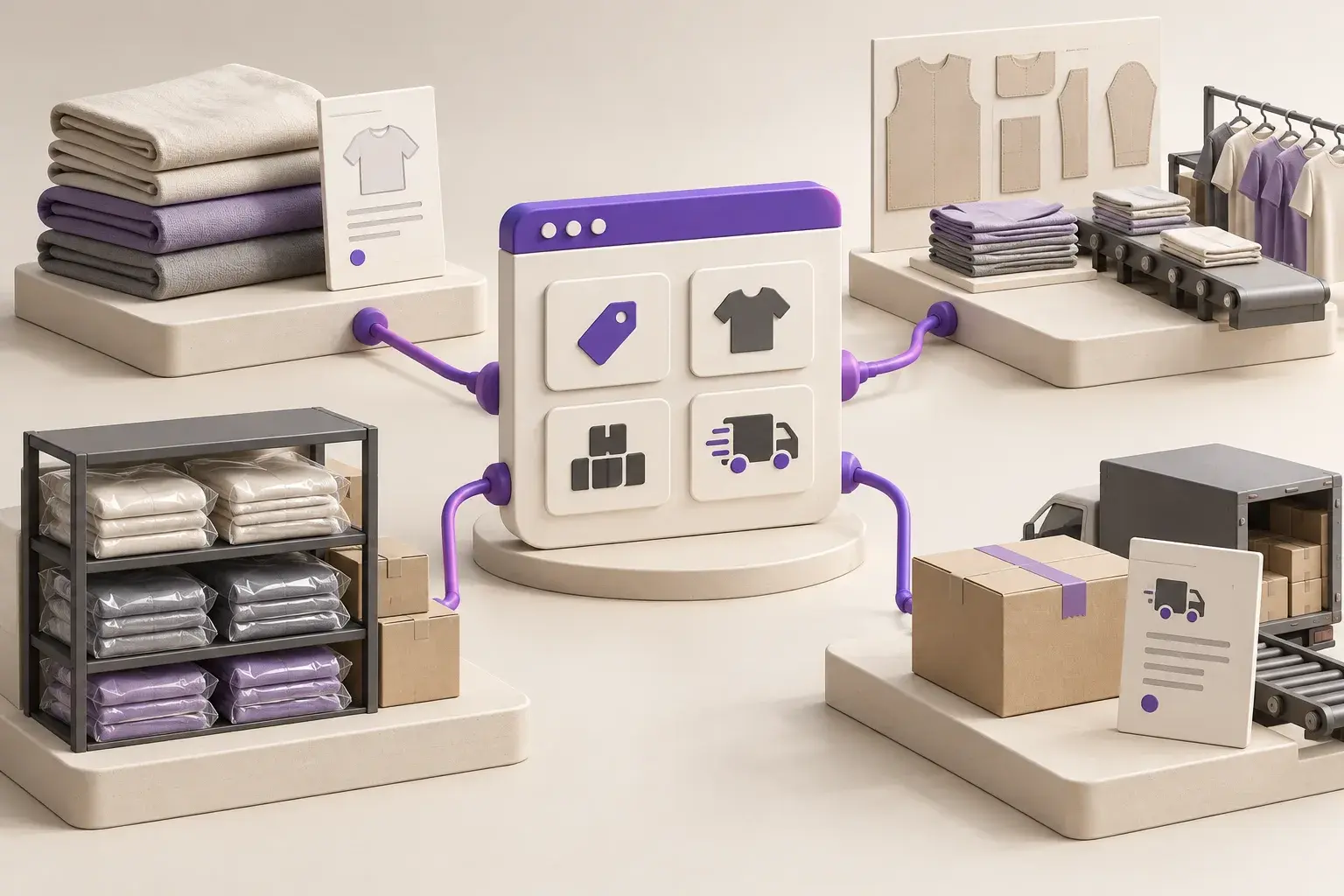
- A centralized ERP covering sales, stock, production scheduling, quality assurance and dispatch
- Platform
- Web application
Where they started
- Sales, stock, production and dispatch each kept their own records, with no shared view across departments.
- Production status was invisible from the office, so checking on a batch meant walking the floor or calling for an update.
- Documentation and approvals moved on paper, which delayed each stage of an order.
- Delivery commitments were hard to hold with confidence because stock and timelines were not tracked in one place.
What we built
One workflow from enquiry to dispatch
Sales, stock, production scheduling, quality assurance and dispatch sit inside the same system, so an order moves through each stage without a handoff between spreadsheets.
A live view of every production run
Dashboards show the status of each batch as it moves through the floor, so a manager can see what stage an order has reached without leaving their desk.
Stock numbers that match the shop floor
Stock levels, raw material consumption and reorder points are tracked inside the same system that runs production, so a purchasing decision uses the same numbers as the people cutting and stitching.
Customer and vendor records in one place
Sales and procurement work from the same customer and vendor records, so a question about an order or a delivery does not depend on which spreadsheet someone last updated.
Reporting built from live data
KPI reports and performance summaries pull from the operational data as it stands, so a review meeting works from current numbers instead of a report assembled the night before.
What changed
Nobody has to chase down a status
Status changes are visible in the dashboard the moment they happen, so tracking an order no longer means calling production or checking with three different people.
Production runs on a visible schedule
Scheduling and tracking are handled inside the system, so a production run follows the plan instead of depending on someone remembering to update a spreadsheet.
Better visibility for delivery planning
Stock and timelines are tracked together, so a delivery commitment is made against numbers the system already has rather than an estimate.
One system replaces the separate spreadsheets
Sales, production and dispatch now read from the same records, so the customer experience stays consistent regardless of which department last touched the order.
Four departments, four separate versions of the truth
Sales tracked enquiries. Stock tracked material. Production tracked batches. Dispatch tracked shipments. Each record was accurate on its own, but none of the four connected to the others, so a question that crossed a department boundary needed a phone call and a wait. As the client’s order volume and product range grew, that gap started to cost real time, and delivery commitments got harder to hold with any confidence.
Mapping the workflow before writing any code
Before building anything, we walked the full enquiry-to-delivery sequence with the people running each stage, marking where work waited, doubled back, or got re-entered somewhere else. That map became the specification for a centralized ERP web application built specifically for apparel manufacturing, covering sales, stock, production scheduling, quality assurance and dispatch inside a single platform. Production monitoring dashboards gave the office the same live view of a batch that the floor already had, and stock and consumption analytics tied raw material use to reorder points instead of a manual review cycle. Dedicated tools for customer and vendor management sat alongside smart reporting and KPI tracking, so the same platform that ran daily operations also produced the numbers leadership needed.
One system, read by everyone
Once sales, production and dispatch were reading from the same records, status stopped being something someone had to chase down. A manager could see where an order sat without leaving their desk, and a customer commitment could be made against numbers the system already had rather than an estimate. The fragmented process that had built up as the business grew was replaced by one workflow that every department could see into, which is what kept the delivery experience consistent regardless of who touched the order last.
Our manufacturing software work connects production, inventory and departmental records around the operation.
Services used on this build
Have a process that looks like this one?
Tell us which workflow you want to improve and the systems it depends on. We will help define a practical starting point.