
Healthcare (United States)
AI-Powered Healthcare CRM & Monitoring
Delivered for a US healthcare provider.
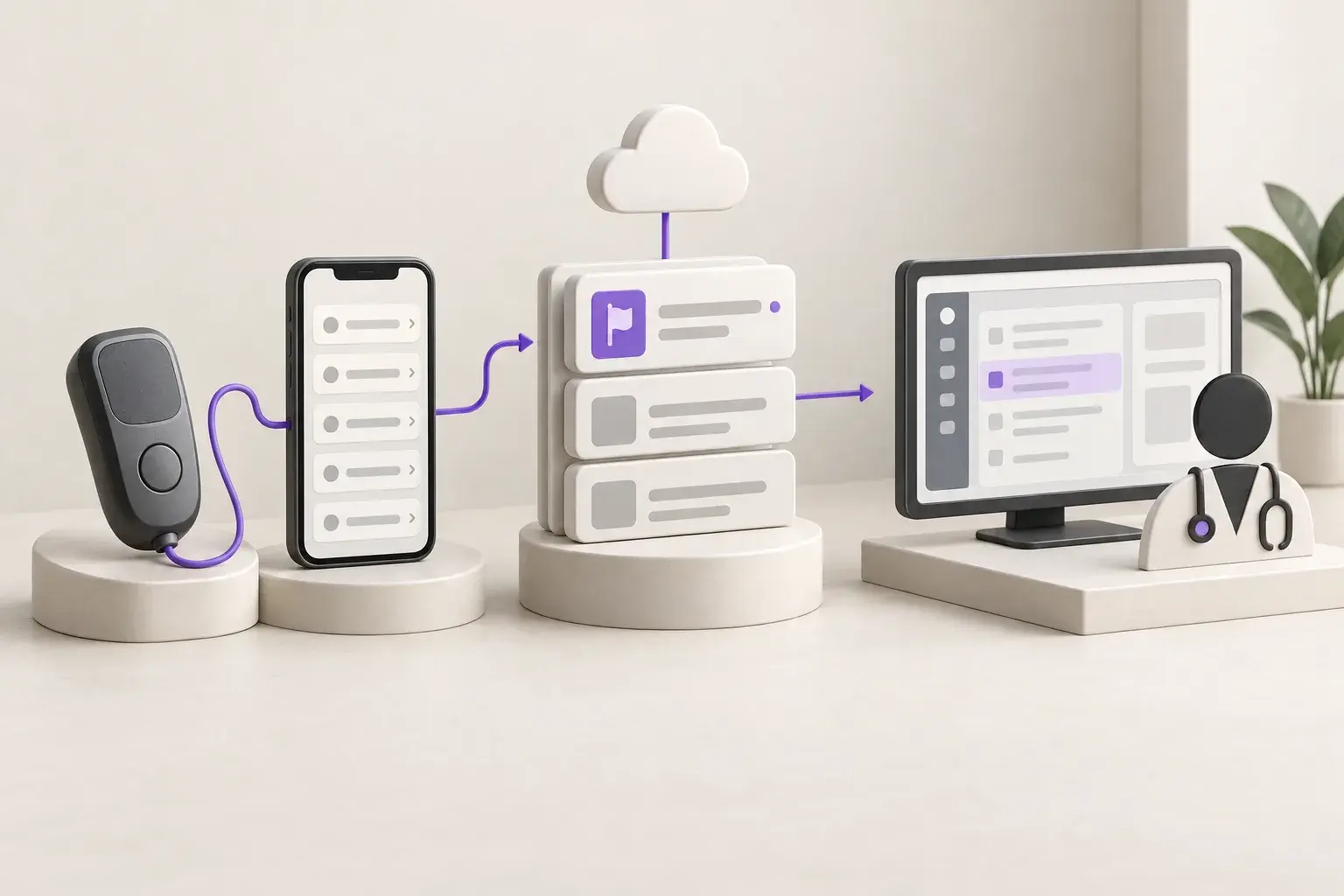
Engagement snapshot
- Sector
- Healthcare (United States)
- Client
- A US healthcare provider
- Engagement type
- Healthcare CRM and AI monitoring build
- What we built
- Vitals and activity tracking with AI-driven insights, patient dashboards and doctor review interfaces
- Platform
- Healthcare CRM with an AI monitoring layer
Where they started
- Patients logged vitals and activity by hand, which was slow and left room for mistakes.
- A medical update could sit before it reached the doctor or caregiver who needed to see it.
- Doctors received raw logs instead of a summary that told them what needed attention.
- Patients and caregivers needed dashboards simple enough to use without training.
What we built
One CRM holds the whole patient relationship
The CRM is built around the patient's health history and ongoing data streams, so a caregiver works from one record instead of piecing it together from separate systems.
AI insights from vitals and activity trends
An AI layer looks for patterns across a patient's vitals and activity data, so a change that matters surfaces on its own instead of waiting for someone to notice it in a log.
Vitals and activity are tracked in one module
Dedicated modules record and display vitals and daily activity, so the data a doctor needs is captured in the same place it will later be reviewed.
Patients and doctors each get their own view
A patient dashboard is built for day-to-day self-management, and a separate doctor interface presents the same data in the detail a clinician needs.
Alerts fire when the data calls for it
The system flags a reading or trend that needs attention in real time, so a response does not wait for a scheduled review.
What changed
Patients can follow their health information
Tracking and personalised insights give patients an ongoing view of their vitals and activity, supporting the self-management aim of the project.
More accurate remote monitoring
Connected tracking modules and structured patient information helped the provider monitor patients more accurately.
Quicker medical response workflows
Real-time alerts and structured data help clinical teams review changes sooner.
Doctors work from a structured summary
Structured, AI-processed insight replaces the raw data feed, so a clinician's review starts from what matters instead of from everything that was recorded.
Vitals recorded by hand, and updates that arrived late
Remote patient monitoring depended on patients logging their own vitals and activity, a process that was slow and left room for error at the point of entry. When something changed in a patient’s condition, that update had to travel from a manual log to a caregiver before anyone could act on it, and doctors were left working from raw entries instead of anything that told them what actually needed attention.
A CRM built for the data, with AI reading what it means
We built a healthcare CRM around the patient relationship and the specific data streams remote monitoring produces, with dedicated modules for recording vitals and daily activity. An AI layer sits on top of that data, looking for patterns and generating predictive insight instead of leaving a doctor to read a raw feed. Patients get a dashboard built for day-to-day self-management, and doctors get a separate review interface built for clinical use, both drawing from the same underlying record. Real-time alerts flag a reading or a trend that needs attention as soon as the data shows it, rather than at the next scheduled check.
Faster response, and a clearer picture for the patient
Because the AI layer processes incoming data continuously, a flagged case reaches a clinician as soon as the system sees it, rather than at the next scheduled review. Patients get a clearer, ongoing view of their own health instead of a single logged number, and doctors work from structured insight instead of a raw log. The platform supports the provider’s expansion of remote monitoring services.
Patient tracking and digital support are part of our healthcare software work. We scope new systems around the information, users and review requirements involved.
Services used on this build
More delivered systems
Have a process that looks like this one?
Tell us which workflow you want to improve and the systems it depends on. We will help define a practical starting point.