
Finance
Digitalizing the End-to-End Loan Lifecycle
Delivered for A finance-sector organisation serving public borrowers.
Engagement snapshot
- Sector
- Finance
- Client
- A finance-sector organisation serving public borrowers
- Engagement type
- Mobile app and CRM development
- What we built
- A borrower-facing loan application with an admin CRM for tracking, risk scoring and reporting
- Platform
- Hybrid mobile app plus web-based CRM
Where they started
- Loan requests moved through manual, paper-based tracking that only one office could see at a time.
- A borrower had no way to check an application's status except by calling or visiting in person.
- Application data arrived in whatever format a borrower or field agent used, so errors surfaced only after the fact.
- Assessing a borrower's risk relied on manual review rather than a consistent scoring method.
What we built
Borrowers apply from their phone
A hybrid mobile app lets a borrower submit a loan application and its supporting details from wherever they are, instead of visiting a branch to start the process.
Staff see every application in one dashboard
A CRM gives administrative staff a live view of every loan in the system, from first submission through to disbursement and repayment.
Risk scoring runs inside the same workflow
An analytics module provides borrower risk scoring and performance insight alongside the application, supporting the staff review process.
Access is set by role
Staff and agents see the parts of the system their role requires, which keeps the workflow secure without slowing down day-to-day processing.
Both sides get notified automatically
Automated notifications update borrowers and staff as an application moves forward, so neither side has to call and ask what stage it has reached.
What changed
Faster loan processing
Digital applications, validation and status tracking reduce the paperwork and fragmented information involved in processing a loan.
Improved accuracy in borrower records
Structured forms and digital validation support more consistent data entry and make submission issues easier to identify.
Reduced reliance on paper
Submission and approval happen inside the app and the CRM, so a loan file no longer depends on a physical document moving between offices.
Borrowers can see where they stand
Real-time status tracking means a borrower checks their own application instead of calling to ask, which is where most of the earlier frustration came from.
Paper files and a lender that could not see its own pipeline
Loan requests moved through manual, paper-based tracking, and a borrower’s application status lived wherever the paperwork happened to be sitting that day. Processing was slow because visibility into a borrower’s profile and their application’s stage depended on someone physically locating the file. As the lender looked to shift toward an automated, scalable service model, the paper-based process itself had become the constraint holding that shift back.
One platform for two very different users
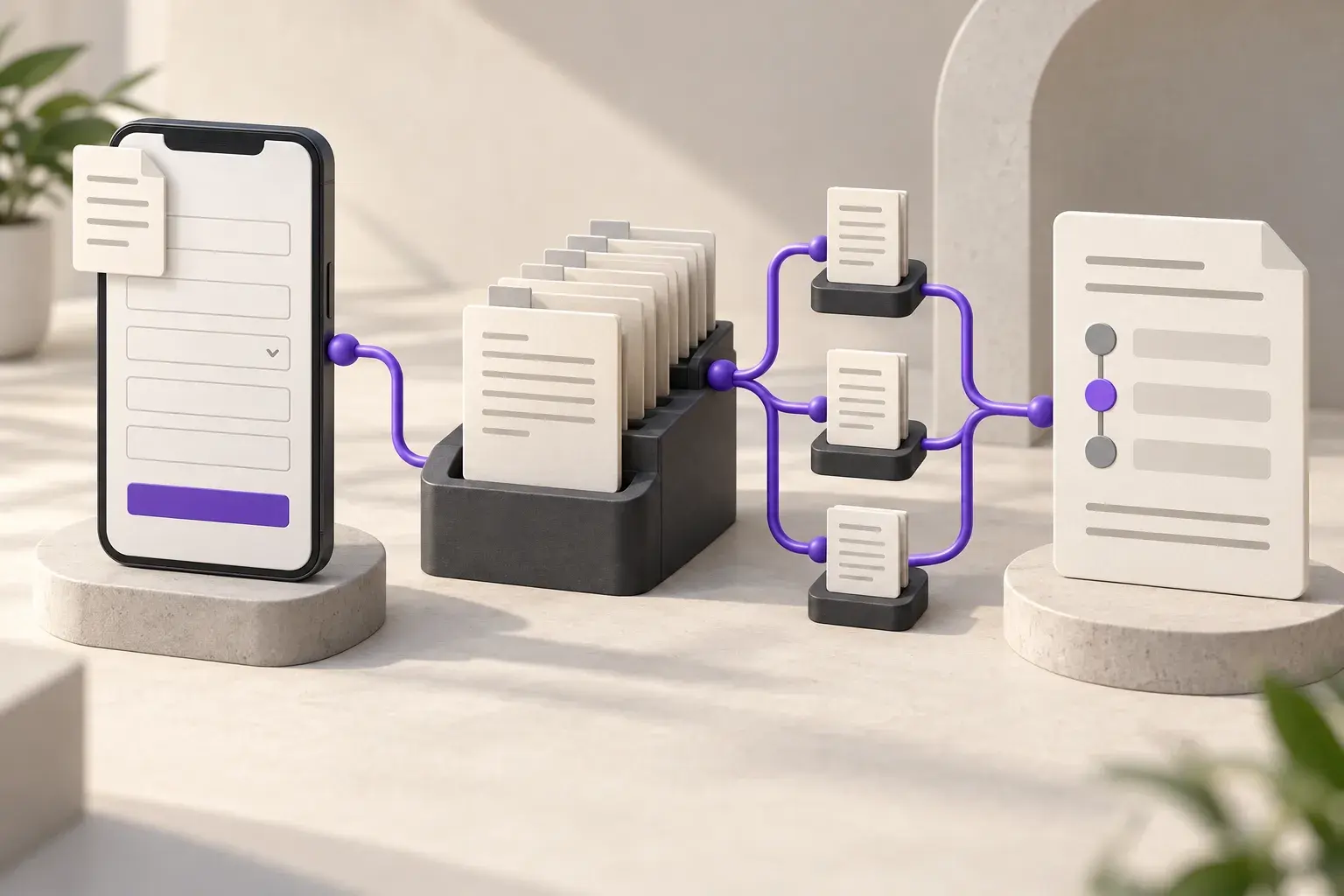
The brief called for two things at once: a way for public borrowers to apply and track a loan from a phone, and a way for administrative staff to manage every application from one place. We built a hybrid mobile app for the borrower side, covering submission and real-time status tracking, alongside a centralized CRM for staff that gives them the loan lifecycle from first application through disbursement and repayment. Digital validation and structured submission forms enforce data quality at the point of entry, an integrated analytics module handles risk scoring and performance insight, and role-based access keeps staff and agent permissions matched to their job. Automated notifications keep both sides updated without either one needing to ask.
What changed for the borrower and the lender
A borrower now applies and checks status from their phone instead of visiting a branch or calling in, and staff work from a single dashboard instead of fragmented spreadsheets and paper files. Because validation happens digitally at submission, the team has a clearer way to identify incomplete or inconsistent submissions. The lender’s shift toward an automated, scalable loan model is now the system running in production.
For finance software projects, we bring borrower-facing workflows and administrative records together around the review process.
Services used on this build
More delivered systems
Have a process that looks like this one?
Tell us which workflow you want to improve and the systems it depends on. We will help define a practical starting point.