
Healthcare
AI-Powered Digital Healthcare Assistance
Delivered for a digital health provider.
Engagement snapshot
- Sector
- Healthcare
- Client
- A digital health provider
- Engagement type
- AI chatbot and website development
- What we built
- A chatbot trained on structured medical knowledge, set inside a responsive, SEO-optimized website
- Platform
- Custom-trained AI chatbot with a web front end
Where they started
- The helpdesk answered the same routine medical questions from patients over and over.
- Generic FAQ answers did not account for an individual patient's own condition.
- Medical information had to be explained in language a non-specialist could actually follow.
- Support was only available through the hours and channels the helpdesk staffed.
What we built
A chatbot trained on structured medical knowledge
The AI model is trained on structured medical knowledge specific to the provider, so its answers reflect a patient's actual condition instead of a generic response.
Answers are written for a patient to understand
The conversational interface is built around clarity, so a complex medical explanation reaches the patient in language they can follow without a follow-up call.
The chatbot sits inside a website built to be found
A responsive, SEO-optimised website provides the main access point for the chatbot and supporting resources.
Responses are grounded in the provider's own data
Structured medical knowledge datasets are integrated into the chatbot to support patient-specific responses and the reliability of the information presented.
What changed
Fewer routine queries reach the helpdesk
Because the chatbot answers routine patient questions directly, human support time goes to the cases that actually need a person's judgment.
Support runs outside office hours
Patients get an immediate, personalized response at any hour, rather than waiting for the helpdesk to open.
Patients reach support without extra steps
The website and chatbot are the single access point for information and support, so reaching help does not depend on knowing a phone number or an office location.
Patients leave understanding their own information
Because the chatbot is built for comprehension first, a patient finishes a conversation with an answer they can use rather than a document to interpret alone.
A helpdesk answering the same questions on repeat
Patient support was built around a helpdesk fielding a high volume of routine, repetitive medical questions, which limited how much attention was left for cases that actually needed a person. Generic FAQ answers did not account for an individual patient’s own condition, and medical information is hard to communicate clearly to someone without a clinical background in the first place.
Training an AI chatbot on the provider’s own medical knowledge
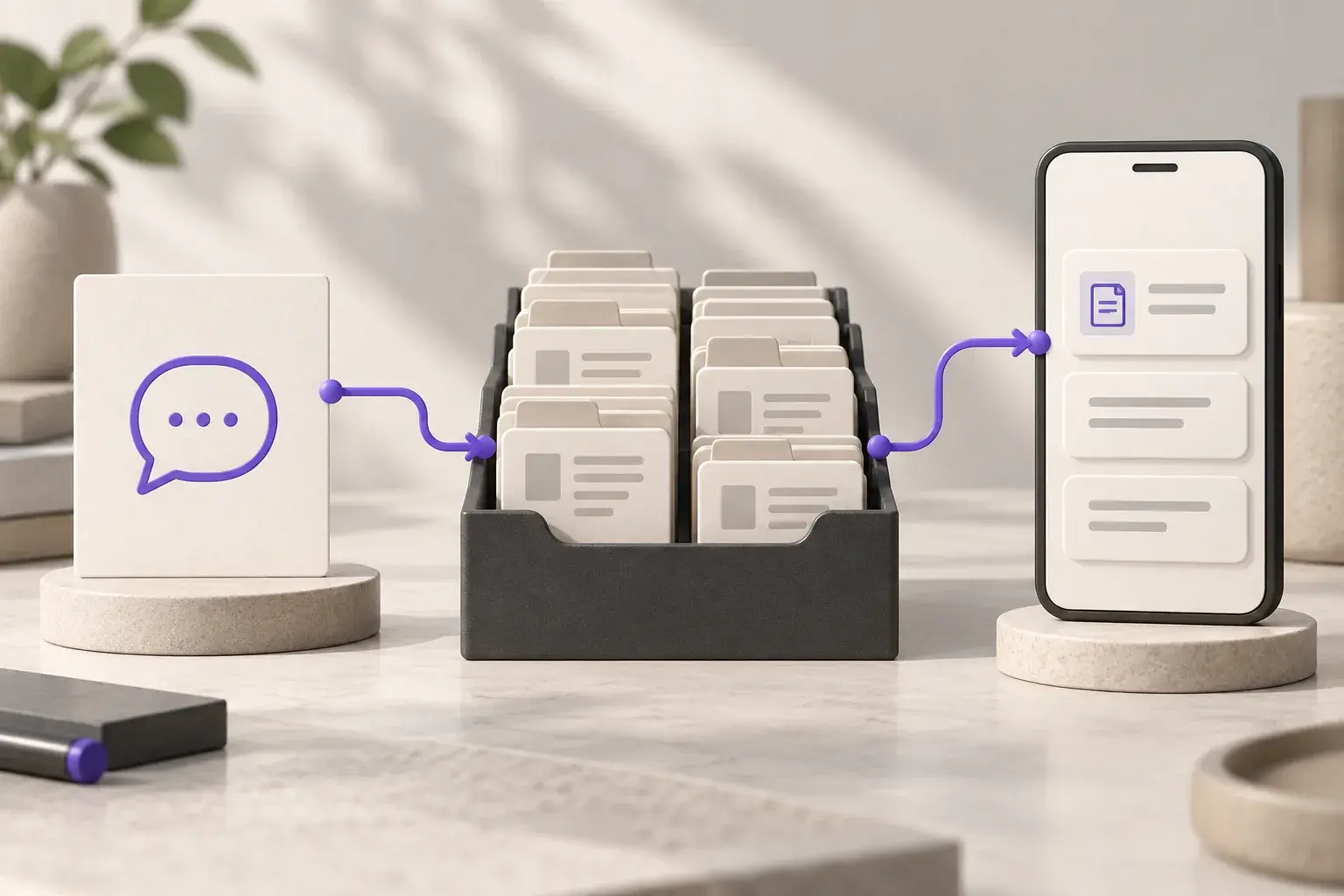
We built a custom-trained AI chatbot on structured medical knowledge specific to the provider, so a response reflects a patient’s actual condition rather than a generic answer pulled from general text. The conversational interface was engineered specifically for clarity, since a technically correct answer is not useful if a patient cannot follow it. That chatbot sits inside a responsive, SEO-optimized website built as the main entry point, so patients reach support through the web interface.
More accessible self-service support
Routine questions now get answered directly by the chatbot, which frees human support time for the cases that need a person’s judgment. Patients get an immediate, personalized response at any hour rather than waiting for the helpdesk to open, and because the chatbot is built for comprehension first, they leave the conversation with an answer they can actually use. The provider’s helpdesk load dropped as a direct result of queries the chatbot now handles on its own.
Patient tracking and digital support are part of our healthcare software work. We scope new systems around the information, users and review requirements involved.
Services used on this build
More delivered systems
Have a process that looks like this one?
Tell us which workflow you want to improve and the systems it depends on. We will help define a practical starting point.